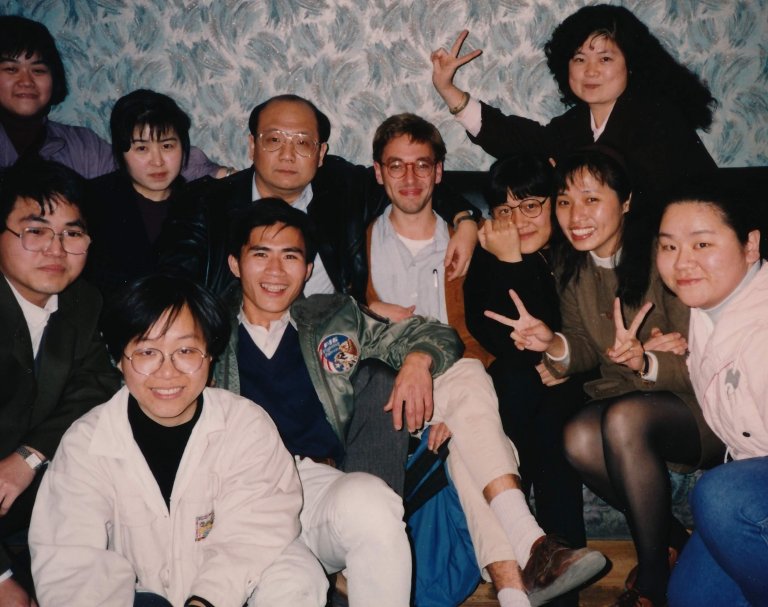
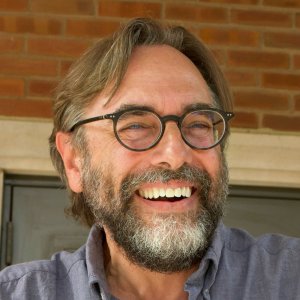
Nearly 35 years ago, a young man fresh out of college enrolled in a summer Mandarin course and bought a one-way ticket to Taipei, hoping to land a job teaching English.
For most of the 1990s, Taiwan was my home. It was where I fell in love with teaching and deepened my knowledge of Chinese. Although there were plenty of mistakes and missteps along the way, I slowly began to understand how language could bridge cultures.
I could not have imagined that decades later, I would return to the place that launched my career in international education, but this time as an international education administrator on a Fulbright IEA Seminar.
This trip brought me full circle.
Looking for Guangzhou Street
When I received my Fulbright award, I felt a complicated mix of emotions. On the one hand, I thought I knew Taiwan. I spoke some Mandarin, had eaten at night markets, and had even mustered the courage to ride a scooter on the streets of Taipei. But I also knew that the Taiwan I remembered was a grainy snapshot from the 1990s, and that the country’s higher education landscape had evolved in ways I could only imagine from a distance. My six years there had mostly been spent teaching in buxibans 補習班 (private language schools) and doing private tutoring; I had heard of Dong Hai University, National Sun Yat Sen University, National Cheng Kung University, but I had never set foot on their campuses. That gap in professional knowledge was precisely what this seminar helped me to bridge.
The moment we were dropped off at the hotel on that first Sunday morning, the familiarity was instant and disorienting. The rhythm of the city came flooding back, along with all of the sounds and smells. But one moment made the distance of those years unmistakably real: I rode a YouBike toward the neighborhood where I had lived as a young teacher, a few blocks from where our hotel was located in Ximending (西門町). I was searching for the first place I called home in Taipei, the little house on Guangzhou Street (廣州街) I remembered so clearly. Riding up and down narrow alleys near the Botanical Garden, I came to a dead end. I rode back out and discovered that the house was gone. In its place was a new apartment building and a parking lot. Standing there on that sidewalk, I understood viscerally what 35 years can mean to a city—and to a person.
Two Reunions
The seminar delivered what I had hoped for: real access to universities and conversations about partnerships and collaboration. But it also delivered some surprises.
At National Taiwan University, during one of our first campus visits, I found myself face to face with a former Vanderbilt student. Fifteen years later, he is NTU’s Executive Director for International Affairs. The reunion was brief but meaningful. To see someone I had known earlier in my career now leading international education at one of Taiwan’s most prestigious universities felt like confirmation that the connections we make in this work ripple outward in ways we cannot predict.
Another reunion was with a friend I had not seen in years. We had been close when I lived in Taiwan, and the years since had taken us in different directions. Sitting together again in a Yongkang Street restaurant over a bowl of beef noodle soup felt like the perfect way to spend a Sunday afternoon. We were in our old stomping ground and the friendship effortlessly picked up where we left off. That was one of the quiet joys of the trip.
The Campuses I Never Saw
The universities themselves were revelations. Visiting campuses I had only known by name gave me a much more complete picture of a higher education system that is extremely well-supported and is committed to internationalization. Taiwan’s goal of becoming a bilingual nation by 2030 was evident everywhere, and the English Teaching Assistant (ETA) program, in which American teachers work alongside Taiwanese counterparts in schools across the island, struck me as a model of genuine language education partnership. Seeing an enthusiastic young ETA in action in an elementary school in Yilan gave me a lot of hope.
Two campus experiences stood out. At National Kaohsiung University of Hospitality and Tourism, we were treated to an outstanding meal designed and prepared by the students themselves, including an amazing scallop and bitter melon appetizer that I’m still thinking about. It was not just a meal; it was a demonstration of learning through doing, with hospitality as both theory and practice.
At Fo Guang University, nestled in the mountains with a view of Turtle Island, the tea ceremony and guzheng music offered a different kind of lesson altogether. The stillness of that moment was magical. The late afternoon sun, the cool mountain breeze, the music, and the quiet care behind everything were unlike anything else in the seminar. It was a reminder to slow down and be present. I can’t think of a better way to demonstrate the Buddhist philosophy of “Five Harmonies” that we had just learned about earlier that day.
Seeing It Now with Different Eyes
The university visits, from Taipei to Taichung to Tainan and Kaohsiung were particularly meaningful for me in my current role as associate director of a language center. In the 1990s, my perspective on Taiwan’s education system had been limited to the classroom and language instruction. This IEA experience provided a much-needed broader view of institutional strategy, policy, and partnership development.
I found myself constantly thinking about new possibilities: How might Vanderbilt students benefit from studying here? Which campuses might be a good fit? What kinds of collaborative programs could we develop? Where do our institutional strengths align?
The answers are still evolving, but the foundation for those conversations has now been firmly established. Even as I write this, an email has come in from a new contact I made at the final FICHET (Foundation for International Cooperation in Higher Education of Taiwan) networking event!
I’ll Be Back
Before I left for Taiwan, I knew this would be a professional development trip. What I did not expect was to come home with 15 new colleagues who now feel more like old friends. Between long bus rides, great meals, and all the inside jokes along the way, we quickly became friends. We have an active WhatsApp group chat, and a conference proposal and a Taiwan-themed book club are already in the works. The network we built is, in its own way, as valuable as anything we learned in any campus presentation.
I now understand that “you can’t go home again,” but maybe that’s not such a bad thing. I’m grateful for the path that brought me back, and for whatever comes next.