When I learned that I had been selected to participate in the Fulbright International Education Administrators (IEA) Program in Taiwan, I felt both excitement and a deep sense of responsibility. As a leader at a U.S. community college, I came to Taiwan eager to learn and reflect on how global partnerships can expand opportunity for students on both sides of the Pacific.
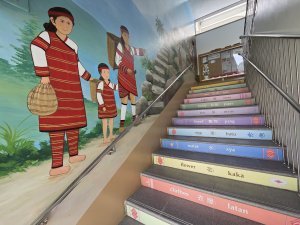
Over the course of two remarkably full weeks, our cohort engaged with government ministries, educational organizations, and institutions across Taiwan. We visited the Ministry of Foreign Affairs, the American Institute in Taiwan, eleven universities, and even an elementary school—each visit offering a different lens on Taiwan’s educational ecosystem. What quickly became clear was Taiwan’s profound and sustained commitment to education as a public good and as a cornerstone of global engagement.

Community Colleges in Conversation with Taiwan
Throughout the program, I found myself drawn—again and again—to institutions that prioritize applied learning, strong industry partnerships, and student‑centered pathways. These models resonated deeply with my work at Pierce College and with the broader mission of U.S. community colleges.
Yuanpei University of Medical Technology stood out in this regard. Its focus on educating healthcare professionals such as nurses, radiology technologists, and biomedical specialists mirrors the role community colleges play in the United States. Walking through labs and training spaces designed to simulate real‑world workplaces, I was reminded that rigor and access are not opposing values.
A similar impression emerged during our visit to National Kaohsiung University of Hospitality and Tourism (NKUHT), Taiwan’s premier institution focused on hospitality, tourism, and service management. NKUHT’s model is unapologetically practice-driven: students complete a required year-long internship, often paid and sometimes abroad, and train in highly realistic facilities such as mock aircraft cabins, hotel operations, restaurants, wine cellars, and demonstration kitchens. Students even wear professional uniforms as part of their preparation for industry expectations.
What struck me most was how intentional the institution is about connecting learning to employment, while also emphasizing professionalism, adaptability, and global competence. In conversations with faculty and administrators, there was a strong awareness that industries such as tourism and hospitality are among those least likely to be replaced by automation or artificial intelligence. This framing resonated strongly with Pierce College’s emphasis on career-connected learning and reaffirmed the value of international partnerships that center applied, human-centered education.
Taken together, visits to institutions like Yuanpei and NKUHT reinforced for me that Taiwan’s higher education ecosystem includes models that align remarkably well with U.S. community colleges, not only in structure, but in philosophy. These institutions see education as preparation for both meaningful work and civic participation, a perspective that creates rich potential for collaboration through COIL, faculty exchange, and program development.
Similar echoes appeared elsewhere. Conversations with representatives from National Tsing Hua University revealed striking alignment in how our institutions talk about diversity, student development, and social responsibility. Even without a dedicated campus visit, these exchanges affirmed that institutional culture and the values embedded within it can serve as a powerful foundation for partnership.

COIL as a Bridge Across Borders
One of the most professionally meaningful moments of the program was the opportunity to speak about Collaborative Online International Learning (COIL) at a conference organized by Taiwan’s Ministry of Education and the Foundation for International Cooperation in Higher Education of Taiwan (FICHET). Interest in COIL was both immediate and enthusiastic.
Many Taiwanese institutions see COIL as a practical, inclusive way to internationalize curricula, particularly for students who may not have the financial flexibility or personal readiness to study abroad. As I spoke with faculty and administrators, it became clear that COIL’s emphasis on shared inquiry, cultural humility, and sustained collaboration aligns well with Taiwan’s broader bilingual education and global talent initiatives.
On the final day of the program, I had the distinct honor of presenting Pierce College’s global workforce partnerships directly to leadership from both the Ministry of Education and FICHET. Sharing how U.S. community colleges integrate access, workforce alignment, and global engagement was a highlight of the experience—and a powerful reminder that our sector has much to contribute to international higher education conversations.

Creativity, Place, and Experiential Learning
A visit to Tainan National University of the Arts offered a different, but equally compelling, vision of applied learning. Situated in Taiwan’s historic cultural capital, the campus itself felt like an invitation to slow down and think differently about how learning happens.
TNUA’s artist‑in‑residence programs, interdisciplinary collaborations, and commitment to place‑based learning sparked immediate ideas for faculty engagement at Pierce College, particularly in the arts, media, and digital design. Standing in studios and performance spaces, I reflected on how experiential learning can help students see themselves not just as learners, but as contributors to cultural and civic life.

Learning Together: The Cohort Experience
Equally meaningful was sharing this experience with my fellow Fulbright IEA participants. The cohort itself became a space for reflection, laughter, and professional growth. Conversations on long bus rides, shared observations, and collective sense‑making enriched my learning as much as any site visit. I left Taiwan not only with new institutional connections, but also with a strengthened professional network that I know will endure well beyond the program.

Looking Forward
Taiwan left a lasting impression on me, not only for its hospitality and beauty, but for its clarity of purpose. Education here is future‑oriented, globally engaged, and rooted in a belief that learning should serve both individuals and society.
The Fulbright IEA experience reaffirmed something I deeply believe: community colleges belong in global conversations about higher education. Taiwan’s openness, innovation, and commitment to applied learning make it a particularly promising partner region, and I look forward to translating these insights into collaborations that expand opportunity for students and faculty at Pierce College.
I am deeply grateful to Fulbright Taiwan for making this experience possible and for reminding me that international partnership, at its best, is not about programs alone, but about shared values, mutual learning, and sustained relationships.