一、前言:Introduction
Prior to joining the Fulbright program, I completed my undergraduate studies in 2024, earning dual Bachelor of Science degrees in Marketing and Chinese, with a minor in International Business and Communication Studies from the Rochester Institute of Technology in New York. At the time of graduation, I was navigating a transitional phase between academic completion and early career planning, with a primary intention of pursuing overseas internships through Princeton in Asia (PiA) program in Taiwan as a pathway toward long-term professional employment.
My initial career strategy focused on gaining practical industry experience through internships, with the expectation that this would facilitate a smoother transition into full-time employment in Taiwan’s creative and marketing sectors. However, through further research into local employment structures and visa pathways, I became aware that completing a master’s degree in Taiwan—or graduating from affiliated institutions—could significantly strengthen eligibility for long-term employment opportunities. This realization prompted a reassessment of my trajectory and ultimately led me to pursue graduate studies in the Institute of Creative Industries Design (ICID) at National Cheng Kung University.
This decision represented both a strategic and personal turning point. While I was still uncertain about specific future outcomes, I had a strong internal sense of direction regarding where I wished to develop my personal, academic and professional path. Taiwan emerged not only as a site for higher education, but also as a space for long-term exploration of identity, creative practice, and cross-cultural engagement.
During this period, I simultaneously awaited admission decisions for both the Fulbright program and NCKU graduate studies. This waiting phase was marked by both anticipation and uncertainty, as the outcomes would determine the next stage of my academic and professional trajectory. In retrospect, this period served as the foundational transition into a more defined path of international education and research.
二、教學定調:內容本位教學設計與大量成段成篇語言輸出
Content-Based Instruction and Extended Academic Expression
Relocating from the United States to Taiwan to begin my master’s program constituted a significant academic and personal transition. Upon arrival, I did not experience pronounced cultural shock, as I have historically adapted readily to new environments. Instead, I approached the transition with openness and adaptability, which allowed for a relatively smooth initial adjustment.
Nevertheless, the transition involved substantial structural and administrative challenges, particularly in relation to immigration procedures. Prior to and during the early phase of my arrival, I encountered significant difficulties in obtaining a visitor visa and subsequently a multi-entry Alien Resident Certificate (ARC). These processes extended over approximately two months and reflected the complexity of Taiwan’s administrative frameworks for international and overseas Chinese applicants.
My background as a transracial asian adoptee—born in Sichuan, China, raised in early childhood there, and subsequently adopted at the age of seven to the United States—further contributed to the complexity of my administrative classification. This resulted in additional procedural ambiguity and required sustained documentation verification.
Despite these challenges, I received critical support from the Fulbright administrative and advising team. Their assistance was instrumental in navigating immigration requirements and ensuring continuity in my ability to reside and study in Taiwan. This institutional support played a decisive role in enabling the successful commencement of my graduate studies.
Academically and personally, my experience during the Fulbright Master’s program can be understood as a dynamic process characterized by fluctuation. Across the two-year period, I experienced alternating phases of academic achievement, social integration, emotional adjustment, and professional uncertainty. These variations reflected not only the demands of graduate study, but also the broader realities of cross-cultural relocation and identity negotiation.
In addition, I encountered instances of subtle exclusion and microaggression, which were often related to my identity as a Chinese American adoptee with bilingual and bicultural experiences. These experiences highlighted the limitations of conventional cultural categorization, as my identity did not align neatly with singular national or linguistic frameworks. As a result, I frequently occupied an intermediary position that required continuous negotiation of self-representation and social interpretation.
While these experiences presented challenges, they also contributed to a more nuanced understanding of identity formation in cross-cultural contexts. In particular, they underscored how belonging is not a fixed condition, but rather an ongoing process shaped through interaction, perception, and institutional structures.
三、以不同的提問方式面向多種語言能力的培養
Multimodal Inquiry and Development of Language and Narrative Competence
My academic research emerged directly from the intersection of personal experience and disciplinary inquiry. My thesis focuses on transracial Asian adoptee identity and digital storytelling, integrating lived experience with theoretical frameworks in creative industries design and communication studies.
Through my studies in the Institute of Creative Industries Design (ICID), I engaged with content-based learning approaches that emphasize the integration of disciplinary knowledge with applied creative output. This pedagogical structure enabled me to explore how narrative frameworks, design thinking, and cultural analysis can be combined to produce more inclusive modes of storytelling.
A key focus of my research is the examination of how adoptee narratives are represented—or underrepresented—within dominant cultural and media systems. Many existing narratives tend to simplify or generalize adoptee experiences, often overlooking the complexity of identity formation across cultural, linguistic, and familial contexts. In response, my research proposes the development of an inclusive storytelling framework that allows for greater narrative depth, multiplicity, and agency.
Methodologically, this involves exploring how different forms of inquiry—visual, textual, and conceptual—can support expanded language expression and identity articulation. Digital storytelling serves as a central medium through which these narratives can be constructed, allowing for multidimensional representation that extends beyond traditional written formats.
Ultimately, my research aims to contribute to broader discussions within creative industries regarding inclusivity, representation, and the role of design in shaping cultural narratives.
四、結語:Conclusion
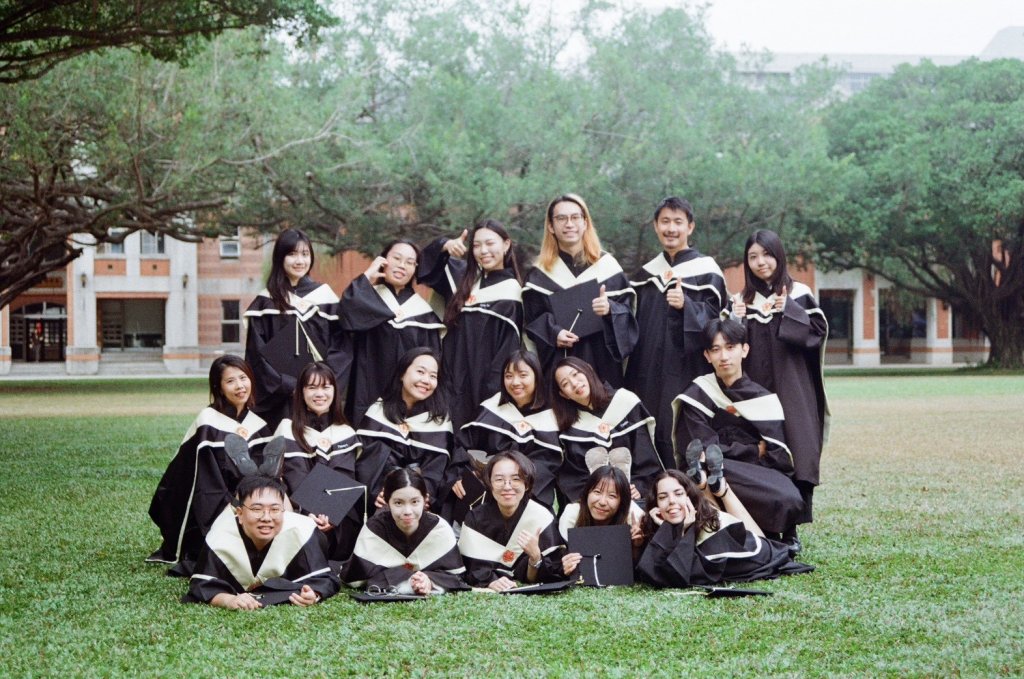
As I conclude my Fulbright-supported master’s program, I find myself transitioning into a new professional phase characterized by both opportunity and uncertainty. I am currently preparing to enter the workforce in Taiwan, particularly within fields such as branding design, marketing strategy, and multinational creative industries.
This transition represents a shift from structured academic training to the more fluid and dynamic environment of professional practice. It can be understood as entering a space of uncertainty, where outcomes are not predetermined and pathways are continuously evolving. In this sense, the future resembles an oceanic environment—expansive, unpredictable, and shaped by shifting currents.
I would like to express my sincere gratitude to my family for their consistent emotional and material support throughout my academic journey. Their encouragement has been foundational in enabling me to pursue international education and navigate complex transitions across countries and institutions.
I am also deeply grateful to my academic advisors, mentors, and the international office at my undergraduate institution for their guidance and support in facilitating my admission to both the Fulbright program and graduate studies in Taiwan. Their assistance was instrumental in shaping the trajectory of my academic development.
Special appreciation is extended to the Fulbright program staff, whose support in addressing immigration and administrative challenges ensured continuity in my studies and residence in Taiwan. I am equally grateful to the faculty of ICID for their academic guidance, interdisciplinary perspectives, and engagement with global creative industries discourse.
Finally, I acknowledge my peers, friends, and communities in both Taiwan and abroad. The relationships formed during this period have contributed significantly to my personal and academic growth.