“Stay Rooted, but Aim High”: Reflections from Taiwan
During my time in Taiwan as part of the Fulbright International Education Administrators Program, I encountered a phrase etched into the windows on the 101st floor of Taipei 101: “Stay rooted but aim high.” At first, it felt like a simple and inspiring message. As the program continued, it became something more. It gave me a way to make sense of what I was experiencing and how I want to approach this work moving forward.
Taiwan offers an incredible landscape for international collaboration. Across two weeks, we engaged with a wide range of institutions, including flagship research universities, specialized programs in healthcare and technology, and campuses deeply connected to industry and community. We also saw strong government support for higher education and global engagement, with clear investments in funding, infrastructure, and internationalization efforts. There is a real sense of momentum, and it is compelling.
One thing that also stood out to me was how much range Taiwan offers. There truly is something for everyone. In higher education, there are globally recognized research universities as well as highly specialized and technical institutions, each serving a distinct purpose. That same range exists beyond the classroom. Mountains for hiking, lakes and beaches for exploring, and vibrant cities full of energy and culture. That diversity makes it possible to design programs that align with a wide range of student needs, academic interests, and goals.

What stayed with me most was not just the scale of opportunity, but the energy behind it. It is easy to get caught up in that energy and want to pursue every possibility.
That is where staying rooted becomes essential.
For me, staying rooted meant grounding myself in the mission, strengths, and priorities of my home institution, the University of San Diego. It meant asking more intentional questions with each opportunity presented. Does this align with our institutional mission? Does this serve our students in a meaningful way? Do we have the capacity to support this well? Is there genuine reciprocity?
These questions became essential because not all partnerships are created equal. Too often in international education, partnerships begin and end with a signed Memorandum of Understanding. While MOUs can serve a purpose, they are not, in themselves, evidence of meaningful collaboration. In some cases, they become symbolic gestures rather than active agreements. Over time, this can lead to partnerships that look strong on paper but lack depth, engagement, and impact.
This experience reinforced for me that meaningful partnerships require more than initial enthusiasm or formal agreements. They are grounded in alignment, not just in mission statements, but in shared values and complementary goals. They depend on mutual investment, with engagement that extends beyond leadership into faculty and staff. Academic compatibility is essential to support meaningful student and faculty experiences. And above all, they require intentionality, time, and consistent follow through to grow into something that lasts.
Holding onto these principles was not always easy. There were moments when I felt pulled in multiple directions by the possibilities in front of me. Each visit brought new ideas and new potential connections. It would have been easy to say yes too quickly.
But staying rooted allowed me to be more thoughtful. It helped me focus on opportunities that felt both aligned and sustainable.
At the same time, the second half of the phrase, aim high, matters just as much.
Staying rooted should not limit ambition. If anything, it should sharpen it.
When there is alignment and shared investment, we should not limit what is possible. We should think beyond single programs or short-term exchanges. We should look for ways to build partnerships that are dynamic and evolving. That might include student mobility, faculty collaboration, joint research, or new program models.
The institutions we visited in Taiwan showed what is possible when vision, resources, and commitment come together. That level of ambition is something worth striving for.
Balancing these two ideas, staying rooted and aiming high, is not simple. It requires constant reflection and adjustment. Throughout the program, I found myself moving between excitement and evaluation. Both are necessary. That balance is what makes this work both challenging and meaningful.
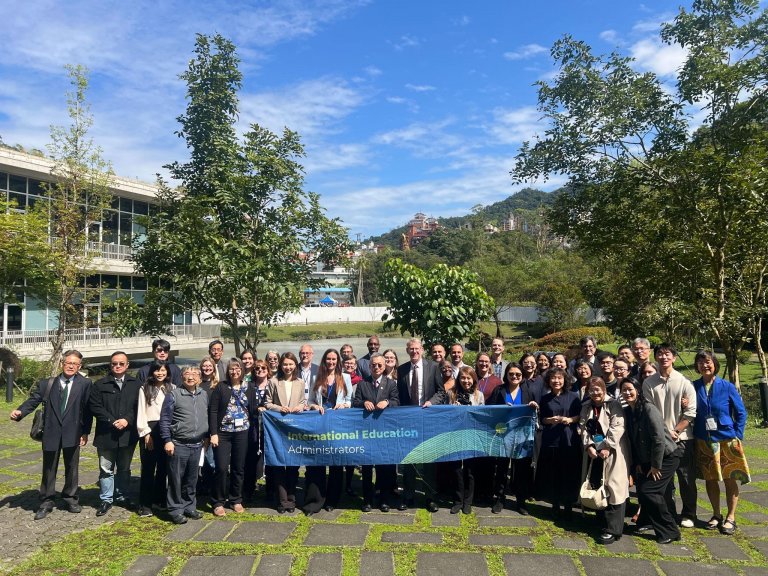
One of the most meaningful parts of the experience was the time spent with fellow Fulbright participants. The relationships built over those two weeks were significant. Our conversations were thoughtful, honest, and energizing. We shared ideas, challenges, and perspectives shaped by our different institutions. Those exchanges pushed my thinking and reminded me that this work is both complex and deeply collaborative.

Traveling across Taiwan and engaging with its universities gave me a deeper appreciation for the care and intention behind how systems are built. There was a consistency in how thoughtfully things were designed, from infrastructure to higher education and global engagement. Seeing that level of intentionality also reinforced for me why this work matters. I am fortunate to be in a position where I can travel, learn from others, and build relationships across contexts, and I do not take that lightly. It also strengthens my responsibility to create opportunities for others to have similar experiences.
As I return to my work at the University of San Diego, I carry both inspiration and a clearer sense of direction. I am excited about the possibilities for collaboration, but I am also more grounded in how I approach them.
For future Fulbright participants, my advice is this. Take in as much as you can, but stay connected to your purpose.
It is easy to be inspired by what you see. The institutions are impressive. The people are thoughtful. The opportunities feel endless. But the real value comes from what you choose to do with that experience.
Stay rooted in your institution’s mission and strengths. Ask thoughtful questions. Be honest about what will work and what will not.
And when you find the right opportunity, aim high. Invest in it. Build something that lasts.
Because in the end, international education is not about how many partnerships we have. It is about the depth of the relationships we build and the impact they have on our students and institutions.
“Stay rooted but aim high” is a simple phrase, but it is one I will carry with me.