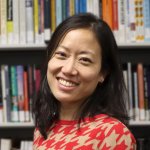
On the Fulbright application, there is a question about purpose—about what you hope to learn, and the impact you hope to have. I answered the question without much certainty. I knew I wanted to come to Taiwan, and I wanted to pursue a master’s degree. What I did not know — and what I can only put into words now at the conclusion of this experience — is what Taiwan has meant to me.
If I had to describe it in one word, it would be: uncomfortable.
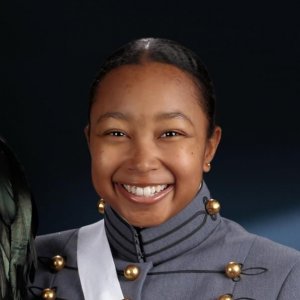
I say that not as a complaint, but as a form of gratitude. I graduated from West Point, where discomfort is built into the curriculum. When Fulbright offered me the opportunity to come to Taiwan, part of me thought life would soften. In some ways it did. Taiwan is full of heart-warming food, welcoming people, and designed for ultimate convenience. But moving thousands of miles away, building a new community in a language that is not your mother tongue, and finding your place when your old support systems are far away is its own kind of discomfort. Looking back, every meaningful experience I have had while in Taiwan began with a sense of discomfort.
It started in the classroom. During my first year, Fulbright’s Critical Language Enhancement Award (CLEA) gave me the chance to take one-on-one Mandarin classes. My teacher, 紀老師, quickly became both my fiercest advocate and my most demanding critic.
CLEA required me to present on a topic of my choosing at the end of the first semester. I chose to present on Taiwanese comfort women. I had recently visited the Ama Museum in Taipei — a memorial to the Taiwanese women forced into sexual slavery by the Japanese military during World War II — and I could not stop thinking about it. I had studied Japan’s occupation of Taiwan. But I had never known of Taiwan’s comfort women, and it left me feeling naïve. As I continued to research for my presentation, I kept returning to the notion that acknowledgement of comfort women in Taiwan’s history is not a matter of politics or national identity, but rather a matter of humanity. Presenting on that topic in front of an audience and doing my best to communicate the impact of what I had learned in Mandarin was stressful. But, challenging my Mandarin ability, learning about comfort women, these things reminded me of how much Taiwan had to offer me, to broaden my perspectives, and examine questions I had never thought to ask.
Later in the year, my graduate program brought me to Kinmen Island. Kinmen is a archipelago that sits about a mile from mainland China. Even today, the small land is still visibly shaped by the bombardments during the cross-strait conflicts of the 1950s; giant metal obstacles, Czech hedgehogs, still sit on most of Kinmen’s beaches. It was while on this trip that I purchased a cooking knife, forged and crafted from the very artillery shells the PRC had fired upon Kinmen decades ago. I was holding history.
In Kinmen, we also visited a comfort women exhibition that centered on the women who had been held as sexual slaves under the KMT. Inside the exhibition, you could read the rules and regulations that governed the soldiers’ visits to the women. It was presented as a controlled and bureaucratic process. As I walked through the exhibition, I could not help but feel the narrative was centered around the idea of service and duty. That the comfort women were to serve the military that was protecting them. It is a story I have heard often about women and war.
These early experiences pushed me to want to continue to learn more about the history of the place I now called home. I told 紀老師 I wanted to enroll in an East Asian history course at NCCU, but I was hesitant as the class was taught entirely in Mandarin, and none of my friends were taking it. 紀老’s response was “Do it.”
So, I did. On the first day I could not find the classroom. I was wandering around campus, lost, thinking that this was a sign I should drop the class and go home. Instead, I called my Taiwanese friends from my program who found me and walked me to the right building. They cheered me on as I walked into the classroom, nervous and stressed. That feeling never went away, but I always showed up to class.
As the only foreigner in the room — and the only non-history major — my hand was always raised. Questions about Cold War politics, current cross-strait tensions, and sometimes just Mandarin vocabulary. One day my classmates kept using a word I had never encountered: 朝鮮, a term used to refer to North Korea, which I only knew as 北韓. It was such a small thing, a single word, but it humbled me. It reminded me that language, and learning in general, is a lifelong process. There is always more to discover, and that the more you know, the more the world becomes available to you. That classroom, as uncomfortable as it was, continued to feed my passion for knowledge.
My professor also spoke about the decades when American military bases operated on Taiwan— another fact I never knew. He talked about how the US had quietly removed Taiwan’s only nuclear physicist in order to deter a potential strike against mainland China.
Curious about the lesser-known aspects of the US-Taiwan relationship, I wrote on Taiwan’s Black Cat Squadron. The Black Cat’s were a group of elite ROC Air Force pilots who, in partnership with the CIA, flew U-2 spy planes under the cover of a dark sky over mainland China throughout the 1960s. It was the Black Cats who made it possible for the US to monitor the PRC’s nuclear weapons development. Yet, despite their instrumental role in intelligence gathering, the squadron’s existence remained classified and unacknowledged until long after the Black Cats had stopped flying.
My thesis project carried a similar focus toward the human cost of strategic and political decisions. I wrote on China’s dualistic posture toward the regulation of autonomous weapons, examining how states commit to responsibility and governance on the international stage while preserving developmental flexibility at home. My research across topics looked to same question I had been asking since my presentation on comfort women: who bears the cost when those in power make decisions about the use of force or how it is regulated?
My academic interest remains on women, peace, and security because I cannot separate the intellectual question from the personal one. I am a woman in uniform. I have spent my adult life inside institutions that were not originally built for me, finding my footing, asking what it means to serve. Taiwan allowed me to continue to ponder my own identity through the lens of its living history. Taiwanese comfort women, the Black Cat pilots, and the complicated relationship between Taiwan and the major powers that dictate its survival. What I carry forward from my classroom experiences is gratitude and the weight of responsibility that I am honored to carry. Gratitude for those who have come before me who have paved the way forward. I am constantly remined that I stand on the shoulders of giants, and I know it. It is these giants and the village of people—classmates, professors, advisors, mentors, program directors, secretaries who have made my journey as a scholar possible. I am deeply grateful for them.
Outside of the classroom, it was the everyday experiences that truly molded my discomfort into a sense of community.
Fulbright Director, Dr. Randall Nadeau often talks about how he believes a more fitting name for the “Fulbright Foundation for Scholarly Exchange” is to replace the world “scholarly” with “cultural”. Dr. Nadeau first mentioned this framing at orientation. At the time, I had been in Taiwan for three days, and I nodded along without much comprehension.
Now at the conclusion of my experience, I would nod my head in total agreement. I simply cannot overstate the role of the community and the culture in my Fulbright Taiwan experience.
First, I want to say something about Hongtai CrossFit—a gym I had debated joining for months before I finally walked through the door. Some of the first people I met at Hongtai was an older Taiwanese couple, Tony and Julia, whom I often referred to as my “CrossFit parents”. Before and after CrossFit classes, they asked about my studies, if I had eaten breakfast, and encouraged me to take on the three must-dos in Taiwan (cycle around the island, swim in sun moon lake, and climb Yushan (Jade Mountain)—scaling the mountain top is the only one I managed to achieve. During class, they effortlessly outperformed me.
Over a period of months, I got stronger and fitter. But more importantly I gained a community. Every morning at 7am, I found a room full of people half-awake or full of energy, who showed up, worked hard, checked in on each other, and laughed together. A community that had nothing to do with my research, my academic program or my role as a Fulbright scholar or an Army officer. The Hongtai community only had one expectation: that I show up. In a society that often pressures us to focus only on accolades, it was an enormous gift to be judged only by my decision to step in to the arena. My only regret is that I did not start sooner.
That same spirit of stepping in to uncertainty also happened in the front seat of a taxi on the road back from Yilan. Mr Chen is a taxi driver who only spoke in his native language, charged with driving me and my sister (who was visiting me in Taiwan) around Yilan for eight hours. I was unsettled by the idea of speaking and translating for a full day. Yet, Mr Chen and I filled the hours with personal exchanges back and forth as he drove us from spring onion fields, to hot springs, to a famous roast chicken restaurant. What I remember about that trip to Yilan are the stories. Mr. Chen told us about his father who served in World War II; his mother — now in her nineties — whose health he credits to Taiwan’s National Health Insurance; and his sister who left Taiwan during the White Terror period and built a life in the US. On the drive back to Taipei, he told us that as a teenager he had dreamed of marrying one of the singers from ABBA. I should note that my sister lives in Sweden. So just like that, the entire ride home turned into a concert.
Another of my most memorable moments came from simply slowing down. One afternoon a friend and I met up to go on a hike. We had decided to sit down and chat before entering the trailhead when a stranger came up to us. After confirming that we had yet to start the hike, the stranger waved us along and said: 來,阿伯帶你們 (Come, uncle will guide you). He left no room for argument. My friend and I glanced at each other in wariness, as if to say “are we doing this?”, but we got up and followed 阿伯 up the trail. 阿伯 moved like a mountain goat, elegant and graceful in his knee high rain boots, while my friend and I who considered ourselves young and fit clambered to keep up. 阿伯 had an extensive knowledge of the vegetation, showed us the best places to stop and take photos, told us how to pose, and recommended other great hikes in the area. It was the most interesting hike I had ever been on.
These experiences always lead me back to my favorite Chinese idiom: 行萬里路,勝讀萬卷書. Traveling ten thousand miles is better than reading ten thousand books. I came to Taiwan to be a scholar—to study and grow academically. But I’ve learned just as much from conversations, hikes, taxi rides, and unexpected moments of kindness.
When Fulbright asked me about my purpose two years ago, I wasn’t entirely sure how to answer. As I depart, I leave with absolutely certainty that my purpose is to keep choosing discomfort. Because the classes that scare you, the conversations in a language you’re still learning, and the communities where you don’t quite know where you fit yet—those are the experiences that shape you.
As I look forward, I do not doubt that there will come a time or two where I am asked to give an account of what my experiences has meant to me. In that moment, I will think back to evenings spent in coffeeshops with 紀老師, reading and re-reading newspaper articles. I will recall the feel of butterflies in my stomach every time I raised my hand as my mind grew to understand the complexities of Taiwan’s rich history. I will think of the way my throat burned as I screamed ABBA lyrics in a taxi driving through fields of spring onions. I will remember the tightness of my chest as I gasped for breath on the floor of a gym above MRT Nangang, lifting my hand just high enough to fist bump my workout buddy. I will smile as I think of walking across the stage to receive my diploma from program director who jokingly refused to turn my tassel, because in doing so, he would also have to acknowledge an end to my time in Taiwan. I cannot discount that this experience will always bring me a sense of joy and gratitude that stems only from the knowledge that I had made the intentional decision to always pick discomfort, and in doing so I reaped the benefits of community, knowledge, and the experience of a lifetime.
That is what these years have been. As the sun sets on my time as a Fulbright Taiwan scholar, it is for all these experiences, individuals, exchanges, and community that I am endlessly grateful and forever indebted to Taiwan.