I arrived in Taiwan searching for a general answer as to why Taiwanese students excel at math in ways that American students often do not. Ever since I began teaching math at a public high school in New York City in 2008, I have been intrigued by Taiwan’s consistency in being one of the top global performers on the Trends in International Mathematics and Science Study (TIMSS) test that comes out every four years. For example, according to the most recent fourth grade math achievement scores from 2023, Taiwan not only ranked second in the world in average performance (after Singapore), it also ranked second in equity of distribution (after the Netherlands) as measured by the narrowest score range (Von Davier et al., 2024).
However, like much of the world, Taiwan has been responding to what the United Nations (2023) calls a “critical education gap” that exists between indigenous children and their peers from majority ethnic groups. The most recently amended Education Act for Indigenous Peoples in Taiwan has called for: “Educational institutions of all types at all levels [to] adopt a multicultural approach and incorporate the histories, cultures, and values of the various indigenous ethnicities into relevant courses and teaching materials” (Ministry of Education, 2021, Article 27). The current Curriculum Guidelines for the 12-Year Basic Education (Mathematics Domain) mandates that mathematics textbook authors should consider ethnomathematics and the contributions of different cultural groups and genders: “Schools with special indigenous focus are encouraged to compile their own teaching materials that can accommodate local cultural interests, thereby facilitating the instructors to implement culturally responsive teaching [emphasis added]” (Ministry of Education, 2018, p. 111).
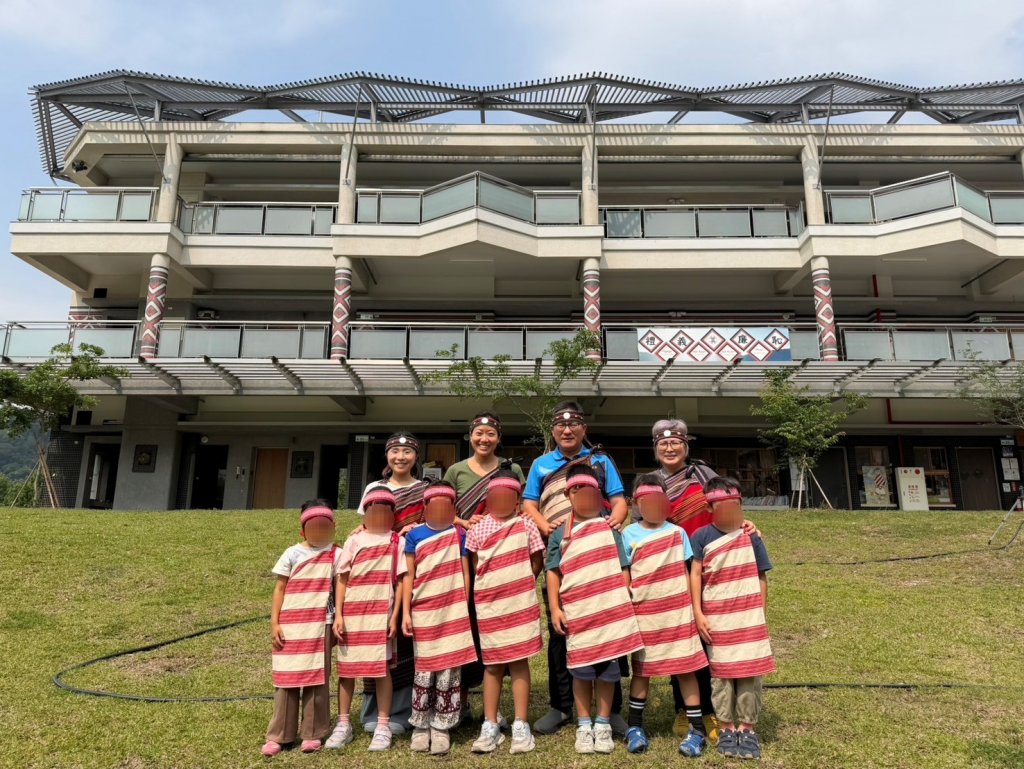
This led me to refine the focus of my Fulbright research project to: How do teachers in indigenous elementary schools understand and implement culturally responsive education (CRE) in their math instruction? With the support of my host university National Taipei University of Education (NTUE), I completed a two-phased research study over the Spring 2026 semester comprised of: 1) a national survey distributed to all elementary school teachers in Taiwan’s public indigenous schools (n=64), and 2) a comparative case study of classroom observations and teacher interviews at two indigenous elementary schools. Specifically, I observed a 2nd and 5th grade class at Danfeng Elementary School – an urban indigenous-focused school in New Taipei City – and a 1st and 6th grade class at Siangbi Elementary School – a rural indigenous experimental school in Miali County. In total, I conducted 17 classroom observations and 12 teacher interviews at these two schools, which were supplemented by 3 additional interviews with indigenous education experts in Taipei and Pingtung. In addition to the principals, teachers, staff, and experts who participated in and made my study possible, I am most grateful to the students for welcoming me into their classroom (see photos of two of the classes below).

As an Associate Professor of Mathematics Education in the Elementary and Early Childhood Education department at Queens College in the United States, my students are pre-service teacher candidates who are aspiring to become elementary school teachers in New York. Most students arrive in the math methods course I teach thinking “mathematics is universal.” My time in Taiwan has provided additional direct evidence that mathematics – and most of all mathematics teaching – is not universal.
In the United States, culturally responsive education (CRE), or culturally sustaining education as it is also referred to (Paris & Alim, 2014), is typically presented as being grounded in developing three core pillars in students: their academic success, their cultural competence, and their critical consciousness (Ladson-Billings, 1995). Some states like New York have operationalized the theory into a practical framework for educators based on four principles: 1) creating a welcoming and affirming environment, 2) enacting high expectations and rigorous Instruction, 3) implementing inclusive curriculum and assessment, and 4) engaging in ongoing professional learning (New York State Education Department, 2018).
Preliminary findings from my study align with core elements of Ladson-Billings’ three pillars of culturally relevant pedagogy, while also revealing important contextual variations in how teachers in Taiwan’s indigenous schools enact CRE. First of all, my observation results validate that fostering academic success through high expectations and rigorous instruction indeed forms the foundation of how veteran teachers in Taiwan implement CRE in their math teaching. For instance, one teacher from the rural indigenous elementary school demonstrated in her interview and classroom observations the importance of both mastering the content and knowing how to adapt textbooks in a way where it is still tightly aligned with the original curriculum. After analyzing the school’s math textbook, she would modify contexts to ground mathematics in her students’ everyday lived experiences. For example, she changed a first-grade word problem about learning money in the context of a school fair – an activity that is familiar to urban students but unfamiliar to her rural students – to purchasing a souvenir or food item during their class field trip to an urban aquarium. However, she never veers too far away from the traditional math content so that her students may still succeed on future high stakes tests. Notably, when she encounters parents who do not prioritize test performance or buy into a lower passing score or threshold for indigenous children, this teacher actively communicates the high academic expectations she has of all her children. She works to either cultivate a shared school-and-family commitment to attaining academic excellence in math (not just in the culturally affirming areas of sports, music and art), or at least to secure family buy-in that she will be persistently pushing their children to achieve.
Secondly, my data substantiate the CRE principle of developing and sustaining students’ cultural competence through inclusive curricula and environments. Specifically, interviews and observations reveal that teachers implement CRE to sustain – and at times resurrect – indigenous culture and traditions that are slowly being erased or have already been lost. Teachers are motivated by imparting and passing on indigenous culture, such as their language, cultural attire, and activities like weaving or hunting. This is particularly important because many of the students’ parents have themselves “modernized” and no longer carry on or may not even be aware of indigenous traditions. For example, one teacher interview even revealed that the school principal often now plays the role of giving indigenous names to students whose parents no longer give them a tribal name.
Finally, many teachers in the United States associate CRE with teaching social justice and achieving equity. However, preliminary survey findings from indigenous elementary school teachers across Taiwan suggest that CRE is implemented not with equity as a stated goal. Interview and observation data further validate that teachers by and large elide sociopolitical consciousness in their reasons for and manners of implementing CRE. Their interest in and motivation to implement CRE seem to align with sustaining indigenous culture rather than addressing historical inequities or issues of diversity, equity, and inclusion – reasons why many critics in the United States accuse liberal educators of political indoctrination or being “woke.” One Atayal culture teacher shared in her interview that where they do teach historical accounts of social injustices in the culture class, it is always taught in a way that balances the “ugly” stories of colonialism with perspectives of how colonizers have also helped indigenous society. Such an approach, as she continued, lends itself to teaching other values like forgiveness that are central in their ancestral moral code and belief system called “gaga.”
Conclusion
I arrived in Taiwan an ardent advocate of culturally responsive education. It is an approach to teaching that I myself have enacted since I began teaching almost twenty years ago. One of the six invited talks I delivered during my Fulbright term in Taiwan was on culturally responsive education, during which I shared how teachers in New York conceive of and approach New York State’s Culturally Responsive and Sustaining Education framework based on a survey study I conducted in 2024.
My time in Taiwan has coincided with a period of social unrest and individual uncertainty for many in the United States. For me personally, my core values and identity as an educator dedicated to improving education for marginalized students and communities have felt under attack. Even prior to coming to Taiwan, I had begun reflecting on my past and present experiences – carefully reshaping my own internal- and external-facing narrative biographies that include what I believe in, what I strive for, and what I put into practice. I have always and will always aim to improve schools, learning experiences, and educational outcomes for all learners – and particularly for those who are underserved in any given educational system.
I still believe CRE is one of the educational frameworks that gives voice to those underserved by creating student-centered environments that affirm all identities. My findings suggest, however, that achieving culturally responsive education is not a universal framework with three equally necessary pillars, but rather a culturally contingent set of practices. The Taiwanese teachers in my study demonstrated what might be called “culturally affirming academic excellence” – prioritizing rigorous math instruction within culturally meaningful contexts – as their model of educational justice. They demonstrated how academic success and cultural competence can be cultivated robustly, and that student engagement and educational equity can be advanced, without centering sociopolitical consciousness. In fact, in a context where it is more urgent to prevent cultural extinction, critical consciousness about systemic inequality might actually obstruct rather than advance the immediate work of cultural survival. This raises a fundamental question: Does critical consciousness, which often involves critiquing dominant systems, conflict with cultural affirmation in the Taiwanese context where indigenous communities are already marginalized?
As for educators like me in the United States who are wrestling with the current polarization around CRE, is it possible to reimagine sociopolitical consciousness as a form of building national solidarity through teaching systemic inequalities, but paired with focusing students’ actions on contributing to a more integrated, cohesive society? Is it possible to redefine critical consciousness so that it directly mitigates the political partisanship that has increasingly constrained educational reform in the United States? As for myself, I still stand by the value of teaching social justice – including in mathematics when authentic connections exist – but as the Atayal teacher reminded me, balanced with the larger perspective of humanity and forgiveness.
Acknowledgments: This project would not have been possible with the research assistance of the undergraduate students Cheng-Yan Liang and Pei-chun Chang from NTUE. I would also like to express my deepest gratitude to: Prof. Yung-Ho Huang and Prof. Hui-Fen Chen from NTUE; Prof. Tiffany Lin, Dean Hsieh, Chiu-Shuan, and Yu-Jing from NTUE; Prof. Wen-Hua Chen, Prof. Ching-Yeh Wang, Prof. Chien-han Chen, and Prof. Karen Chen from NTUE; the teachers and Principal Masaw Yeh from Siangbi Elementary School and Dean Sandy from Danfeng Elementary; Ciwas & Yabu; Prof. Yu-Liang Ting from NTNU and Prof. Ya-Ming Dai from NTUE; and finally Dr. Randall Nadeau, Charlie Cheng, and Jennifer Wu from FSE.
References
- Ladson-Billings, G. (1995). Toward a theory of culturally relevant pedagogy. American Educational Research Journal, 32(3), 465-491.
- Ministry of Education. (2018). Curriculum Guidelines for the 12-Year Basic Education Elementary School, Junior High School, and Upper Secondary School – The Domain of Mathematics. Retrieved June 30, 2023 from https://www.curriculum1-12.nknu.edu.tw/_files/ugd/b38f85_a44bd8177a98479099955a6018ba022f.pdf?index=true
- Ministry of Education. (2021). Education Act for Indigenous Peoples in Taiwan. Retrieved June 30, 2023 from https://law.moj.gov.tw/ENG/LawClass/LawAll.aspx?pcode=H0020037
- New York State Education Department. (2018). Culturally responsive-sustaining education framework. https://www.nysed.gov/crs/framework
- Paris, D., & Alim, H. S. (2014). What are we seeking to sustain through culturally sustaining pedagogy? A loving critique forward. Harvard Educational Review, 84(1), 85–100. https://doi.org/10.17763/haer.84.1.982l873k2ht16m77
- United Nations. (2023). Department of Economic and Social Affairs Indigenous Peoples: Education. Retrieved June 30, 2023 from https://www.un.org/development/desa/indigenouspeoples/mandated-areas1/education.html
- von Davier, M., Kennedy, A., Reynolds, K., Fishbein, B., Khorramdel, L., Aldrich, C., Bookbinder, A., Bezirhan, U., & Yin, L. (2024). TIMSS 2023 International Results in Mathematics and Science. Boston College, TIMSS & PIRLS International Study Center. https://doi.org/10.6017/lse.tpisc.timss.rs6460