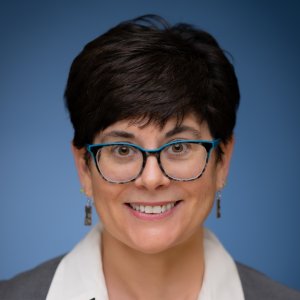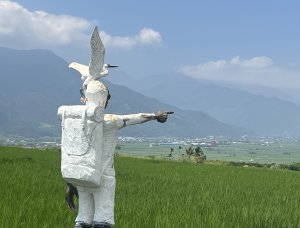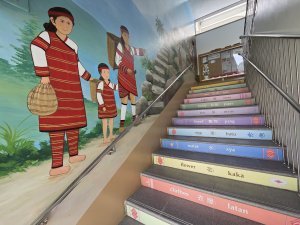
Two semesters as a Fulbright Scholar affiliated with the Department of Taiwanese Literature at National Cheng Kung University (NCKU) in Tainan, Taiwan, passed quickly. I’m gratified to reflect on what I learned and achieved. I hope these words and images convey the richness of my experiences and their significant impact on my professional development and personal growth.
Acknowledgments
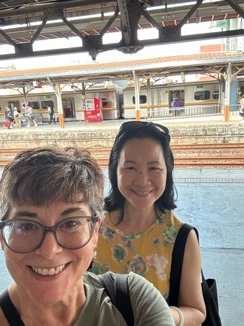
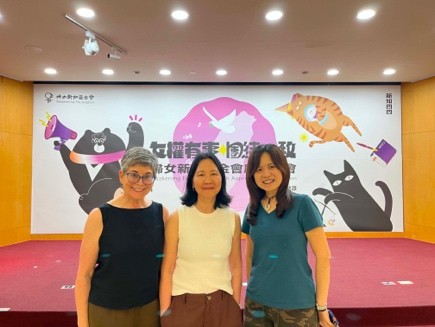
Fortuitous encounters made it possible for me to spend 2025-2026 as a Fulbright Scholar in Taiwan as a Visiting Research Expert at NCKU. Dr. Hsiuhua Shen, Associate Professor of Sociology at National Tsing-Hua University, and Dr. Hsunhui Tseng, Assistant Professor of Anthropology at NCKU, exemplify Taiwanese generosity. About 20 years ago, when Dr. Shen was Postdoctoral Fellow at the Asia Research Institute, she sublet her Singapore apartment to me, an incoming postdoctoral fellow whom she had never met, while she was out of the country! In Taiwan during my Fulbright, we reconnected in Tainan, Chiayi (photo), and Hsinchu. As a past director of the feminist NGO Awakenings, she invited me to their 2026 fundraiser (photo).
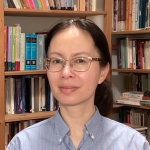
About 15 years ago, Dr. Shen invited me to join a conference panel she organized for the Association of Asian Studies meeting in Washington, D.C. Dr. Tseng was also a panelist. (Drs. Shen and Tseng were acquainted through the US-Taiwan Women’s Scholars Association.) I reconnected with Dr. Tseng by chance in 2017 when I presented a lecture at the Chinese University of Hong Kong Gender Studies Centre where she then was employed. Coincidentally, Dr. Tseng left Hong Kong for a position at NCKU in 2020, about when Auburn and NCKU established a joint Taiwan Center. I met administrators from NCKU in Auburn in 2024, including Professor Shin-Mei Kao, former Dean of Liberal Arts, who issued me a formal invitation to affiliate with their college. Dr. Tseng of the Department of Taiwanese Literature agreed to serve as my host. Photos are of me and Dr. Tseng, and the campus building that houses her department.


Dr. Tseng and I have a mutual friend, Dr. Tami Blumenfield, an anthropologist with expertise on the Mosuo of Southwest China. (She and Dr. Tseng were both doctoral students of Dr. Stevan Harrell at the University of Washington.) A former Fulbright grantee, Dr. Blumenfield suggested I apply for the award and wrote a reference letter. I’m grateful to these women for their support.
Discovering Taiwan
I long identified as a China scholar and overlooked Taiwan. I only visited Taiwan once, to attend an AAS-in-Asia conference at Academia Sinica in 2009. Fulbright gave me the opportunity and time to become more familiar with and knowledgeable about Taiwan as distinct from China. My project studies single women in China and Taiwan, whose populations have increased significantly over recent decades and drawn much attention as a significant social issue in their respective societies. The concern stems from the connection of later and fewer marriages to decreasing births. In both societies, socially sanctioned birth is associated with (heterosexual) marriage. Taiwan’s Total Fertility Rate (TFR) is the world’s lowest, and China’s is similarly low. Low TFR elsewhere in the world has been associated with economic decline and other challenges of demographic transition. Single women have been regarded as a social problem because they challenge patriarchal authority by upending norms of timely marriage and reproduction. I researched this issue in the context of urban China and published investigations of the moral panic over marriage delay and discourse on “leftover” women, as well as single women’s attitudes toward marriage and marital partners, self-perceptions, and experiences of singlehood. The purpose is to explain these demographic and social changes in connection to gender, inequality, and theories of power. Fulbright support enabled me to explore convergences and divergences on this issue between the two societies, which in turn sparked new insights.
Friendly People
Often in Taiwan, while standing on a street corner peering at my smartphone’s Google Maps and appearing lost, strangers offered me assistance. When I was caught in a downpour on campus and looking lost, a woman approached and gave me not only directions but also a hug! No doubt my presentation as a female, white, English L1 speaker invites these friendly interactions. But the abundance of solicitude and hospitality shown by so many Taiwanese is genuine. This welcoming attitude meant recruiting participants for my research was not difficult. Ethnographic participant-observation and semi-structured interviews highlight the voices and lives of the marginalized, such as single women who have been stigmatized for transgressing gender norms. These methods can clarify or complicate statistical data and generalizations. Two women were instrumental to recruitment of informants. First, my host Dr. Tseng introduced me to her single colleagues. Academic interlocutors were collaborators in my research as they were very eager to provide critical input! Second, a gallery owner and talent agent, whom I randomly met soon after arriving in Tainan, introduced me to artists and other creatives, among whom were several single women who joined my study. Everyday interactions in my residential complex, yoga class, beauty salon, etc., were additional opportunities for recruitment. I also learned by conversing with married couples, single mothers, single men, and gay and lesbian singles and couples I met.
Intellectual Discovery and Discussion
The Fulbright academic year was stimulating as it was filled with exposure to new ideas and exchanging knowledge with others. I had not experienced such intellectual stimulation for a long time! I lectured to students at NCKU and Providence University in Taichung (photo). I was interviewed, jointly with my host about our research, for a Kaohsiung radio program (photo). Most rewarding was participating in monthly meetings of NCKU’s Gender Studies Research Center (GSRC). It was a joy to engage with these brilliant and supportive scholars (photo).


Contemplation and Writing
Time and quiet were invaluable gifts of my Fulbright award. I treasured moments of quiet contemplation and writing, seated at a table in my 15th floor apartment in front of a window with an expansive city view (photo). I read articles and participated in online (and in-person) lectures; I wrote fieldnotes and transcribed interviews; I analyzed data; I prepared lecture PowerPoints; and drafted an article on Asian international student migration based on interviews conducted by Auburn students under my supervision. My favorite time of day was the early afternoon, in the middle of the US night, when I was least likely to receive distracting texts, calls, or emails from my family, friends, or colleagues! Of course, I also enjoyed time spent in the conduct of daily life and being social, informally and at work: exploring environs, studying complex characters on street signs, interacting with restaurant and shop employees, or conversing with colleagues and interlocutors. While Fulbright was not a complete break from the responsibilities of my adult life in the US, it allowed spans of time when I could concentrate intently, not only for the benefit and pleasure of doing research but also for evaluating my personal life, career goals, and future.

Balancing Work and Family
My scholarly research and personal experience indicate that in numerous societies women disproportionately shoulder domestic responsibilities. Gendered caregiving roles especially burden working mothers with young children and have consequences for women’s career advancement and wealth accumulation. The Fulbright provided me a respite, though I continued to nurture my loved ones from a distance. In Taiwan, a highly competitive society with long workdays, people of all social classes rely on convenience meals. Prepared meals help alleviate housework and benefit working women in particular. I regularly dined at a mall food court, outdoor hawker stalls, the night markets, or ordered take-away boxed meals. I appreciate the food service workers who enabled me to stay nourished without the mental or physical (be)laboring of planning, preparation, cooking, or clean-up! Nonetheless, without concomitant shifts in ideology, such market solutions, public policies, or social welfare are insufficient to address care work imbalance (the gender double bind). In Taiwan, avoiding (heterosexual) marriage reduces but does not eliminate women’s workload. Unmarried daughters frequently provide financial, logistical, emotional, and physical care for their parents. Gendered care labor provides single women a legitimate social role outside traditional marriage, but may reinforce the gender double bind, societal gender inequality, and hegemonic masculinity. It also may negatively impact women’s autonomy and wellbeing, as they must prioritize others’ needs.
Explaining Singlehood in Taiwan
Disincentives to marriage and family formation in Taiwan as in China include financial concerns and risk aversion. Average income is low compared to other high-income states, and children are expensive to raise, needing extra-curricular educational investment to ensure their competitive success. Also, offspring are a lifelong commitment for parents in Asian culture. Exorbitant housing prices are another factor, raising wedding costs for couples, and especially for grooms and their parents. Increased postsecondary educational attainment contributes to marriage delay and decline, through a reversal of the traditional expectation to “marry first and then establish one’s career.” The persistent norm of marriage gender asymmetry, reinforced by unequal gender ideology, exacerbates the situation; as women are expected to marry men of higher socioeconomic status, they are limited at ever higher levels of postsecondary education. My interviews revealed that Taiwanese women remain single unintentionally and purposefully. Most wish to marry and experience marriage pressure due to cultural patriliny (patriarchy), also manifest as son preference and eldest daughter disease. They are ambivalent about marriage because they value their independence and oppose male superiority and the gender double bind. Most also lack positive role models, citing parents’ loveless marriages, divorce, family gender inequality, and domestic violence. Many mothers support their daughters choosing to opt out.
De-centering Marriage
In Taiwan as in China, I recruited to my study women who identified as “single.” Some had never married and never had an opposite sex romantic relationship. Others previously had boyfriends, fiancés, and/or cohabitant opposite sex partners. A few were separated or divorced. Some were in a “situationship,” a relationship with a man that was romantic and sexual or platonic, but without marriage or cohabitation. In democratic Taiwan, where feminist politicians and NGOs have shaped gender equitable policy and public discourse, singlehood challenges familial patriliny. But unlike in China, Taiwanese interlocutors did not need to justify their choice because singlehood has become a norm, and attitudes toward single women have shifted.
Like interlocutors in China, older single women in Taiwan had faced the stereotype of being undesirable, which is connected to gender ideologies and subtly misogynist. But interlocutors in Taiwan and China rarely associated singlehood with loneliness or lack. They emphasized choice, autonomy, and freedom; they expressed satisfaction with their lives. They enjoyed various types of physical, social, and emotional companionship with parents, siblings, pets, friends, coworkers, and real or imagined communities. Many were teachers nurturing future generations. Single meant not the absence but diversification of intimacy, affection, companionship, and reciprocity.
Marriage and fertility rates are unlikely to increase until societies achieve a more family friendly environment and greater gender equality. This requires social policy to address gendered caregiving burdens and motherhood penalty, which Taiwan is currently advancing. Structural change in employment and family along with cultural shifts in gender norms are also needed.
The conventional marriage system must continue to diversify. Same-sex marriage is legal now in Taiwan, for example. Situationships are further innovations in intimacy and kinship. Severing reproduction from marriage and accepting more diverse families could increase birth rates and benefit single women, LGBTQ couples, and others seeking to procreate (beyond adoption).
Furry Friends


Environmental Awareness
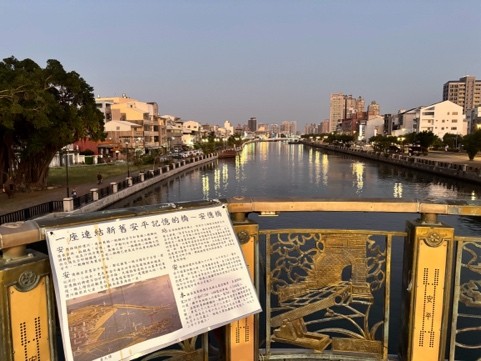
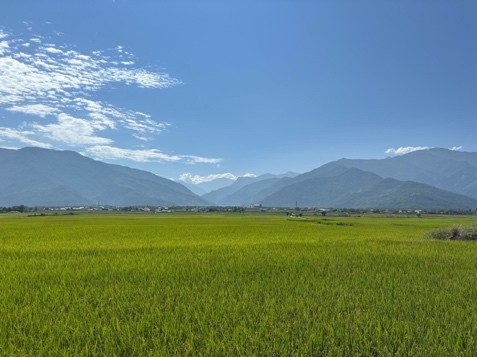
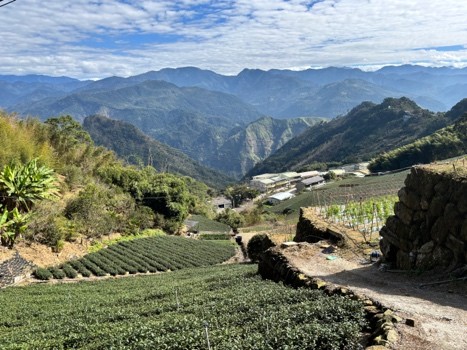
My fondest memories of Tainan are of evening strolls along the canal. In Taitung County I rode a bicycle, for the first time in decades, along Brown Boulevard. What joy to pedal among the rice paddies! In Chiayi County I hiked mountain trails and drank home grown tea and coffee. My apartment complex enforced compost, refuse, and recycling procedures. Taiwan’s beauty is maintained through everyone’s daily practices of environmental sustainability!
New Friendships
On occasion in Taiwan, I felt homesick and missed aspects of my life in the US: my spouse, my house, daily chats with my sister, the convenience of my car. The companionship of new friends defused those feelings. I have fond memories of sharing Tainan with my NCKU host Hsunhui (Dr. Tseng), Fulbrighter Luciano (Dr. Martinez), Auburn colleague Jaime (Dr. Harrison), and others. It’s rare to make new friends at midlife; Fulbright Taiwan was a gift in this regard!
Tributes to Mentors
Taiwan is special to me as it was a significant place for two of my recently deceased mentors. Being in Taiwan this past year allowed me to honor their memory and process lingering grief.
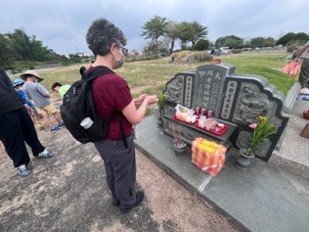
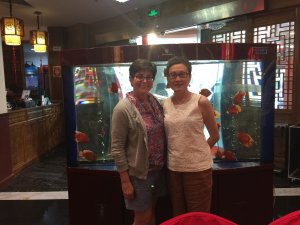
As an undergraduate at Duke in the late 1980s, I switched from English major/French minor to Area Studies major/Chinese minor after taking a class with Taiwan-born Chinese language and literature professor Jing Wang (1950-2021). She bestowed my Chinese name, 葛婷婷, which she said embodied her hope that I would be an “elegant and refined woman,” as in “婷婷玉立.” She became a lifelong mentor to me until her death in 2021, advising me about graduate school, jobs, or life, and meeting me when our paths crossed in Singapore, Beijing (photo), and Boston.
I heard many stories about Taiwan from the late Elizabeth (Betsy) Bowditch, a Hopkins-Nanjing US-China Center co-alumna who became a close friend when we were doctoral students in Los Angeles in the 1990s (she at UCLA and I at USC). She spent 1982-84 studying in Taipei and returned often. Cancer ended her life too soon. I thought of her on my first visit to Tainan’s Museum of Literature at the exhibition “Writing our History,” which discussed Taiwan’s New Wave and included the 1983 film “The Sandwich Man”(兒子的玩偶)by Hou Hsio-hsien, Wan Jen, and Tseng Chuang-Hsiang. Betsy had a cameo in the film (!) as an American nurse at the US Naval hospital where the working-class protagonist, a father of five, is convalescing after being accidentally hit by a limousine driven by an American naval officer (who apologizes with cash, an offer to educate the victim’s daughter in the US, and ripe-red apples). The film critically assesses Taiwan’s relationship with the US in the 1960s-70s and Taiwan’s own national identity.

Lottery Winner!
Selection for a Fulbright Senior Scholar Award was a milestone in my career. I am grateful to the Fulbright (Taiwan) Scholarly Exchange Board members, Executive Director Dr. Randall Nadeau, and all who advocated for me to receive it, as well as FSE staff, especially Charlie Cheng and Jennifer Wu. Fortuitously, in my last month in Taiwan, I won 400 NTD in the receipt lottery!